In the catering and food delivery industry, time and temperature are your biggest enemies. Choosing the wrong insulated container doesn’t just lead to lukewarm food; it risks food safety violations and unhappy clients.
For B2B buyers—whether you are stocking a restaurant chain or a logistics fleet—here is a professional guide on selecting the perfect thermal equipment.
1. Capacity Planning: 10L Small Batch vs. 60L Bulk Transport
One of the most common mistakes is choosing a “one size fits all” container. The right volume depends entirely on your delivery model:
- 10L – 20L Containers: Ideal for high-end boutique catering or office lunch deliveries. They are lightweight, easy for staff to carry, and minimize “dead air space,” which helps maintain temperature for smaller portions.
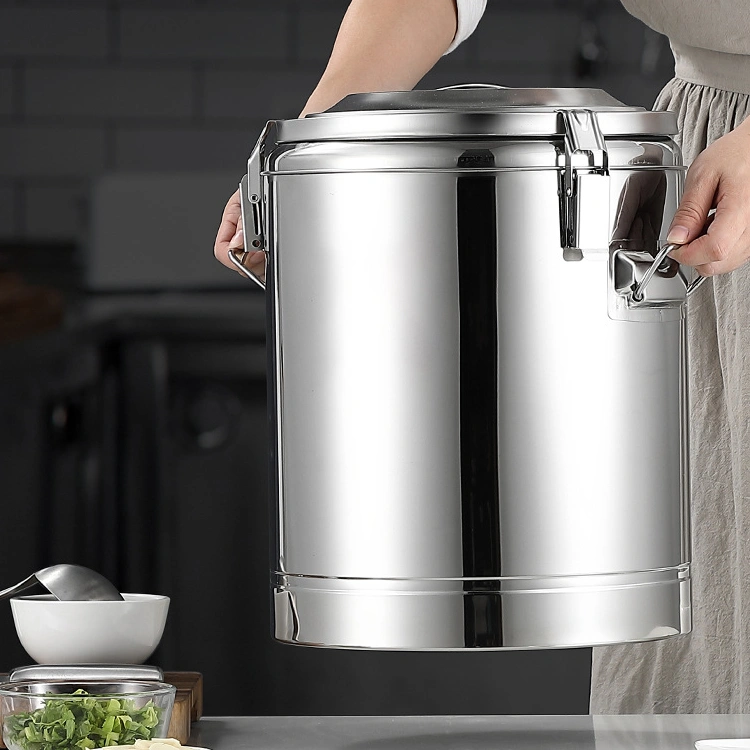
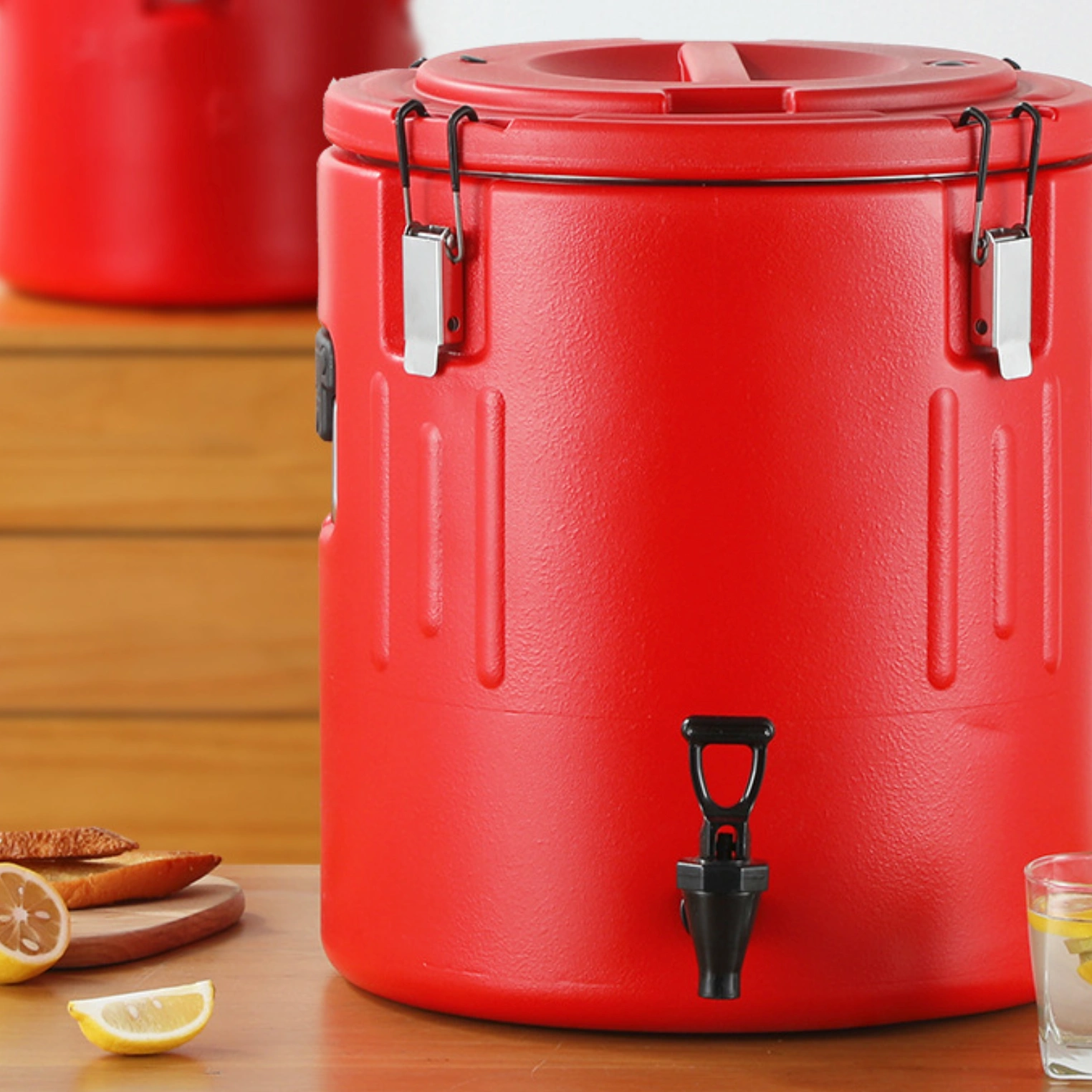
- 40L – 60L Containers: Designed for central kitchens, school meal programs, or large-scale events. These are built for high-volume transport and are often optimized for vehicle space.
Pro Tip: If you frequently transport varying volumes, it is more efficient to have a fleet of mixed sizes rather than under-filling large containers, as space accelerates heat loss.
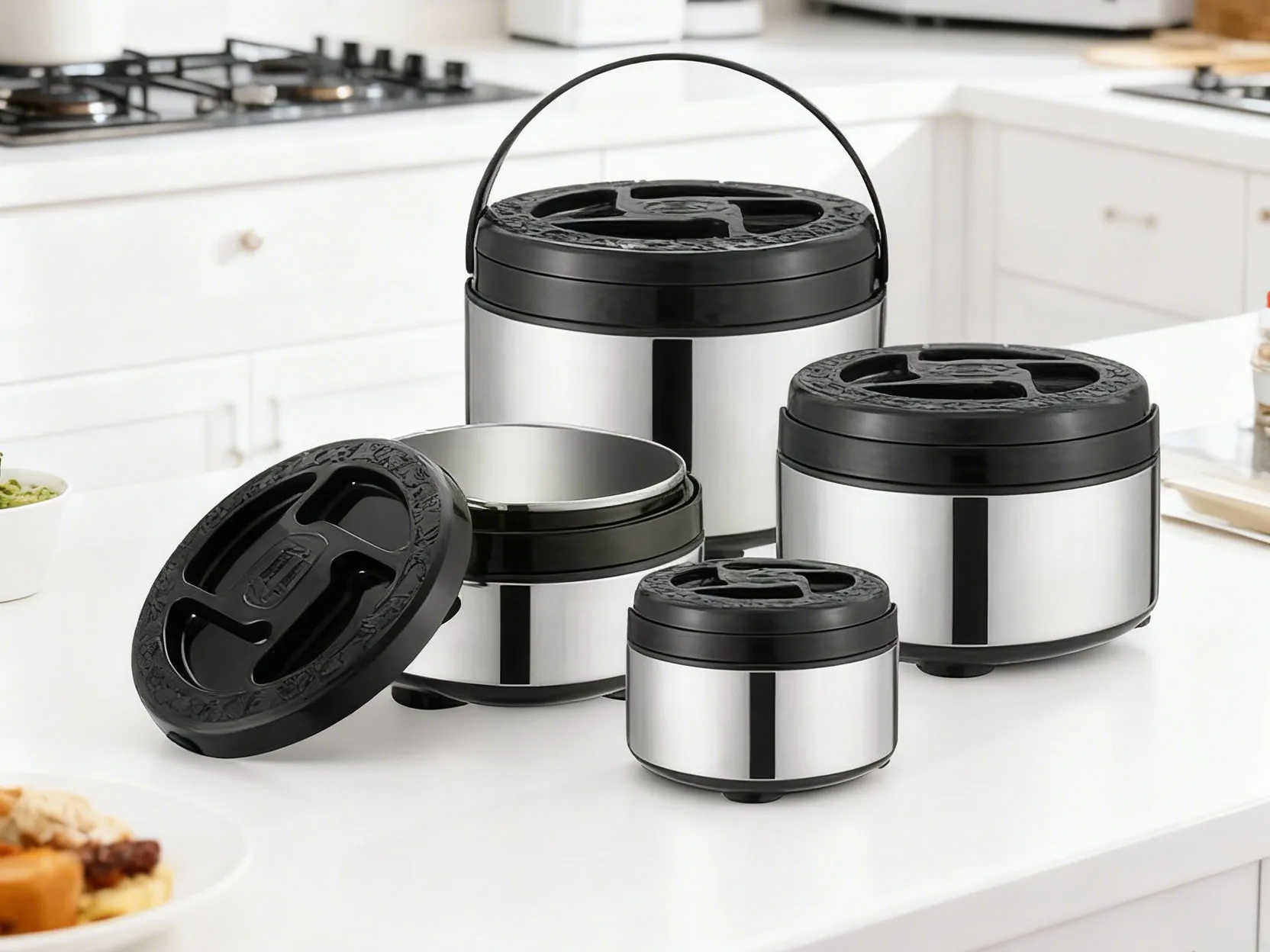
2. Stackable Lunch Boxes vs. Large Transport Boxes
The structure of your container should match your operational workflow:
| Feature | Stackable Lunch Boxes (Multi-layer) | Large Transport Boxes (Bulk) |
| Best For | Diverse menus, individual portions, or multi-course meals. | Single-item bulk transport (e.g., large batches of rice or soup). |
| Pros | Prevents flavor mixing; extremely organized for end-user distribution. | Maximum thermal retention due to high thermal mass; easier to clean. |
| Cons | Slightly more complex to load/unload in high-speed environments. | Requires secondary serving vessels at the destination. |
3. The Science of Temperature: 12-Hour Insulation Benchmarks
How do you verify a manufacturer’s claim of “high performance”? You look at the cooling curve. For premium 304 stainless steel vacuum-insulated containers, the standard benchmark usually starts at a boiling point of 100℃ (or near-boiling).
Temperature Retention Reference Table
Initial Food Temperature: 95℃ | Ambient Temperature: 20℃
| Time Elapsed | Expected Temperature (High-Performance Container) |
| 0 Hours | 95℃ |
| 3 Hours | 82℃ – 85℃ |
| 6 Hours | 70℃ – 75℃ (Safe Serving Zone) |
| 12 Hours | 55℃- 60℃ |
Why Choose Lianmei for Your Catering Fleet?
At Lianmei, we understand that in the catering business, “warm” isn’t good enough—it has to be “hot and safe.”
We specialize in manufacturing a wide range of insulated solutions, from compact stackable units to industrial-grade 60L transport eimers. Our products are engineered with premium 304 stainless steel and high-density insulation layers to ensure your cooling curve stays in the safe zone for longer.
- Customization: We offer OEM/ODM services to tailor sizes and insulation specs to your specific logistics needs.
- Proven Quality: Our designs are trusted by global catering brands for their durability and superior heat retention.
Ready to upgrade your delivery equipment? Explore our full range of professional catering containers at www.lianmeithermos.com or contact our team for a bulk quote today.