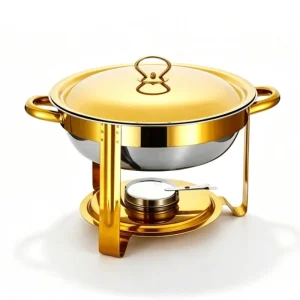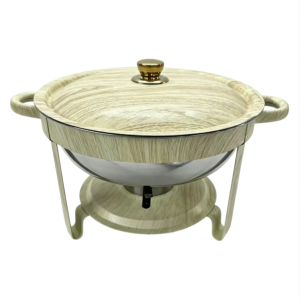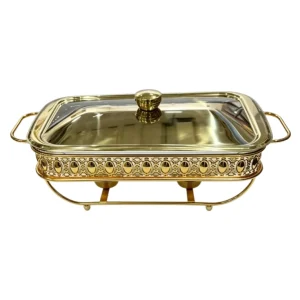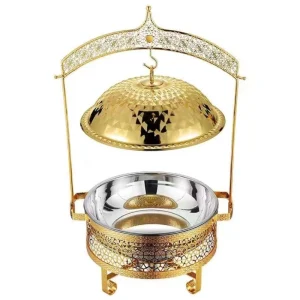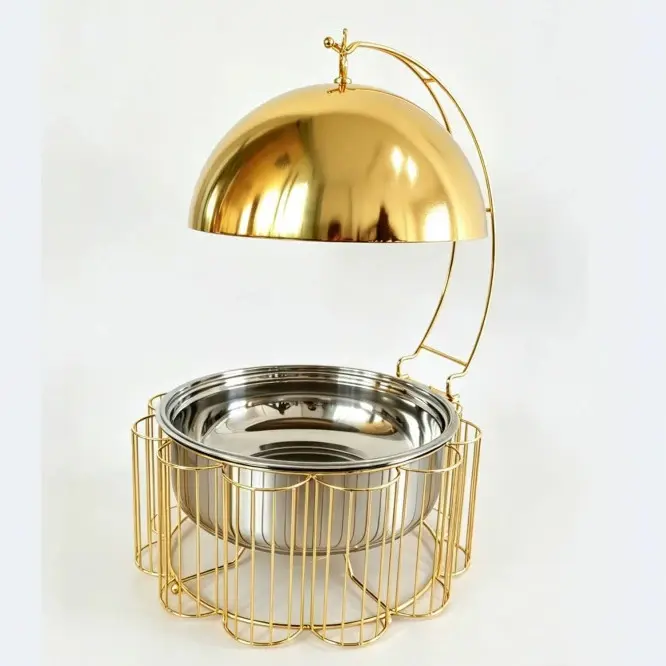
Choosing the right chafing dish is an important decision for hotels, restaurants, catering companies, and banquet venues. A unit that is too small may require frequent refilling, while an oversized unit can take up valuable buffet space. For businesses selecting a commercial chafing dish, the right choice depends on more than capacity. Guest numbers, food type, buffet layout, and service frequency all need to be considered.
Understanding commercial chafing dish sizes helps catering businesses balance food capacity, buffet space, service efficiency, and refill frequency. Before placing a wholesale order, buyers should consider how each size will perform in their actual foodservice environment.
What Are the Common Commercial Chafing Dish Sizes?
Chafing dishes are available in different configurations to support different foodservice requirements. For buyers comparing a commercial chafing dish, understanding the main size categories is the first step toward selecting suitable equipment.
Full-size units are generally suitable for main courses and high-volume service, while half-size options can provide more flexibility for side dishes and smaller portions.
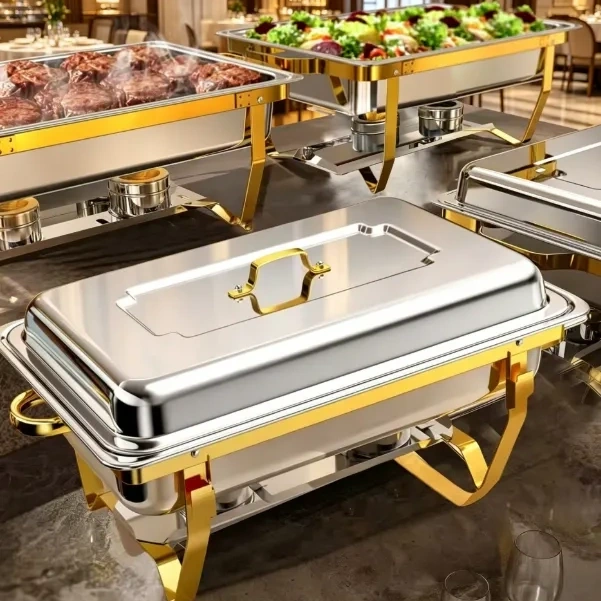
Full Size Chafing Dish
A full-size chafing dish is commonly used for:
- Main courses
- Large-volume food service
- Hotel buffets
- Banquets and large catering events
The larger pan capacity can help reduce refill frequency during busy meal periods. When comparing full size chafing dish dimensions, buyers should also consider pan depth and the overall footprint of the frame rather than looking o
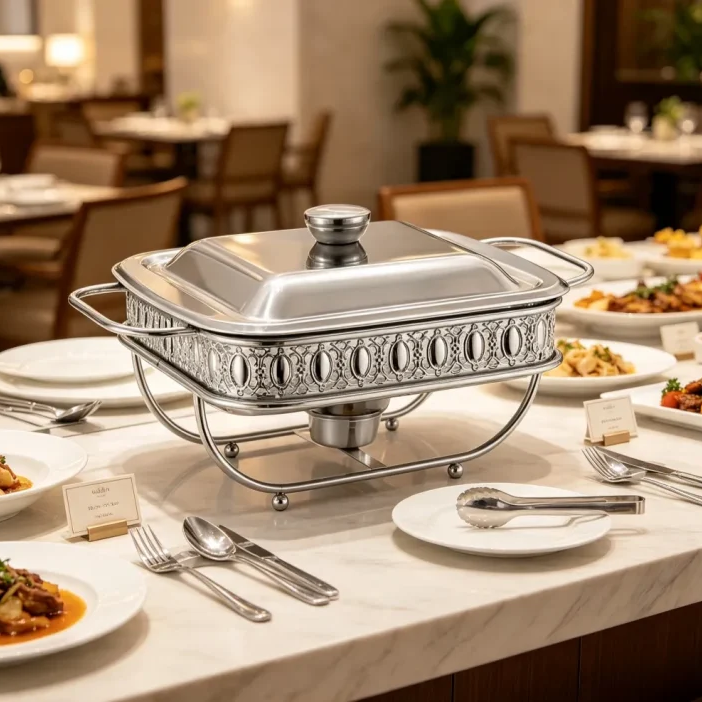
Half Size Chafing Dish
A half-size chafing dish can be useful for:
- Side dishes
- Smaller portions
- Multiple food varieties
- Compact buffet setups
Because they occupy less ta
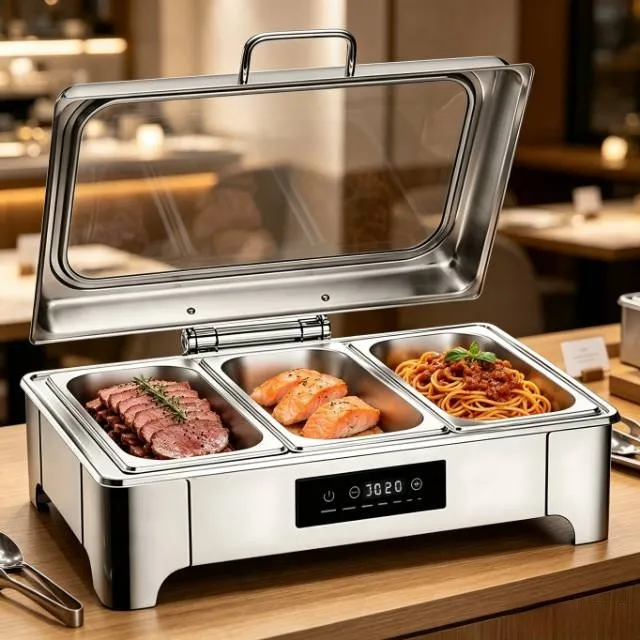
Other Size Configurations
Some foodservice operations use smaller pan configurations for sauces, toppings, vegetables, or specialty foods. However, available configurations vary by supplier and product system.
Buyers should confirm actual product specifications before ordering rather than assuming that every manufacturer offers the same sizes. This is particularly important for wholesale purchasing, where consistency between batches can affect buffet setup and replacement planning.
Commercial Chafing Dish Size Comparison
A simple size comparison can help purchasing teams understand how different configurations fit different service requirements.
| Chafing Dish Size | Typical Use | Food Volume | Best For |
|---|---|---|---|
| Full Size | Main dishes | Large | Hotels and large events |
| Half Size | Side dishes | Medium | Restaurants and catering |
| Smaller Configurations | Portions and sides | Small | Compact buffet stations |
When comparing chafing dish sizes, buyers should consider usable food capacity as well as the amount of table space required.
A larger unit may hold more food, but a smaller configuration may be more efficient when a buffet needs to display many dishes at once. The right balance between size, capacity, and layout can improve both food presentation and service efficiency.
How to Choose the Right Chafing Dish Size for Catering
Choosing the right size requires a practical assessment of how food will be prepared, displayed, and replenished. A commercial chafing dish should match the event rather than simply being selected according to the largest available capacity.
1. Consider the Number of Guests
Guest count is an important starting point, but it is not the only factor. A catering event with a large guest list may use several buffet stations, while a smaller event may serve the same number of menu categories from one compact serving line.
Consider:
- Small gatherings
- Medium-sized events
- Large catering events
- Hotel buffet service
The number of dishes served at the same time, portion size, and expected refill frequency can all affect how many units are needed.
For example, a large event serving several main courses may require more capacity than an event with a limited menu, even when the number of guests is similar.
2. Consider the Type of Food
Different foods require different amounts of serving space.
Main courses generally require larger capacity because they are served in greater quantities.
Side dishes such as vegetables and rice may work better in smaller configurations.
Sauces, toppings, and specialty foods may require even smaller compartments.
Matching pan capacity to the food being served can help reduce unnecessary refilling while keeping the buffet organized.
3. Consider Buffet Space
Buffet space is particularly important for hotels, restaurants, and event venues where several dishes need to be displayed together.
Before selecting a size, consider:
- Table width
- Number of dishes
- Serving line arrangement
- Food presentation
- Space between units
The largest chafing dish is not always the best choice.
A combination of sizes may provide better use of limited buffet space and make it easier for guests to move through the serving line. This is especially relevant when a business needs to present a wide variety of food without making the buffet look crowded.
4. Consider Refill Frequency
Capacity and refill frequency are closely connected.
Larger units can hold more food and may require fewer refills during peak service. Smaller units, however, can make it easier to offer more varieties and rotate dishes.
For catering businesses, the goal is to balance fewer refills with practical menu flexibility.
A high-volume main dish may benefit from a larger capacity, while a specialty side dish may be better served in a smaller configuration. Choosing based on actual consumption patterns can help businesses use their equipment more efficiently.
Full Size vs Half Size Chafing Dishes
Full-size and half-size units serve different purposes, so the right option depends on the menu and service environment.
| Factor | Full Size | Half Size |
|---|---|---|
| Capacity | Higher | Lower |
| Buffet Space | More | Less |
| Main Courses | Excellent | Suitable |
| Side Dishes | Suitable | Excellent |
| Large Events | Excellent | Suitable |
| Menu Variety | Moderate | High |
A full size chafing dish is generally better suited to high-volume main dishes, while a half size chafing dish can provide greater flexibility for side dishes and menu variety.
Full-size units can help reduce the frequency of food replenishment during busy service periods. Half-size units, meanwhile, can make it easier to arrange multiple dishes across a limited buffet table.
When comparing full size chafing dish dimensions, buyers should consider not only capacity but also how much space each unit occupies once the lid is opened and serving utensils are placed nearby.
How Many Chafing Dishes Do You Need for a Catering Event?
There is no universal number of units for every catering event. The quantity depends on guest count, menu size, food volume, buffet layout, and the ability of staff to replenish food.
Rather than using a fixed formula, catering businesses can evaluate their requirements according to event size and service format.
Small Events
Small gatherings often benefit from a compact setup with fewer dishes and a relatively simple menu.
The priority is efficient use of space without creating unnecessary equipment requirements. A combination of smaller and half-size configurations may be sufficient when the menu contains several different dishes in moderate quantities.
Medium Events
Medium-sized events may require a balance of main dishes and side dishes.
Combining full-size and half-size configurations can provide flexibility while keeping refill frequency manageable. This approach can also make it easier to organize food by course or serving station.
Large Events
Large catering events often require high-volume food service and multiple buffet lines.
In these settings, larger-capacity units can reduce replenishment requirements, while smaller units can be used for side dishes and specialty foods.
For large-scale operations, the number of units should also account for backup equipment and the possibility of running several buffet stations simultaneously.
Choosing Chafing Dish Sizes for Different Foodservice Businesses
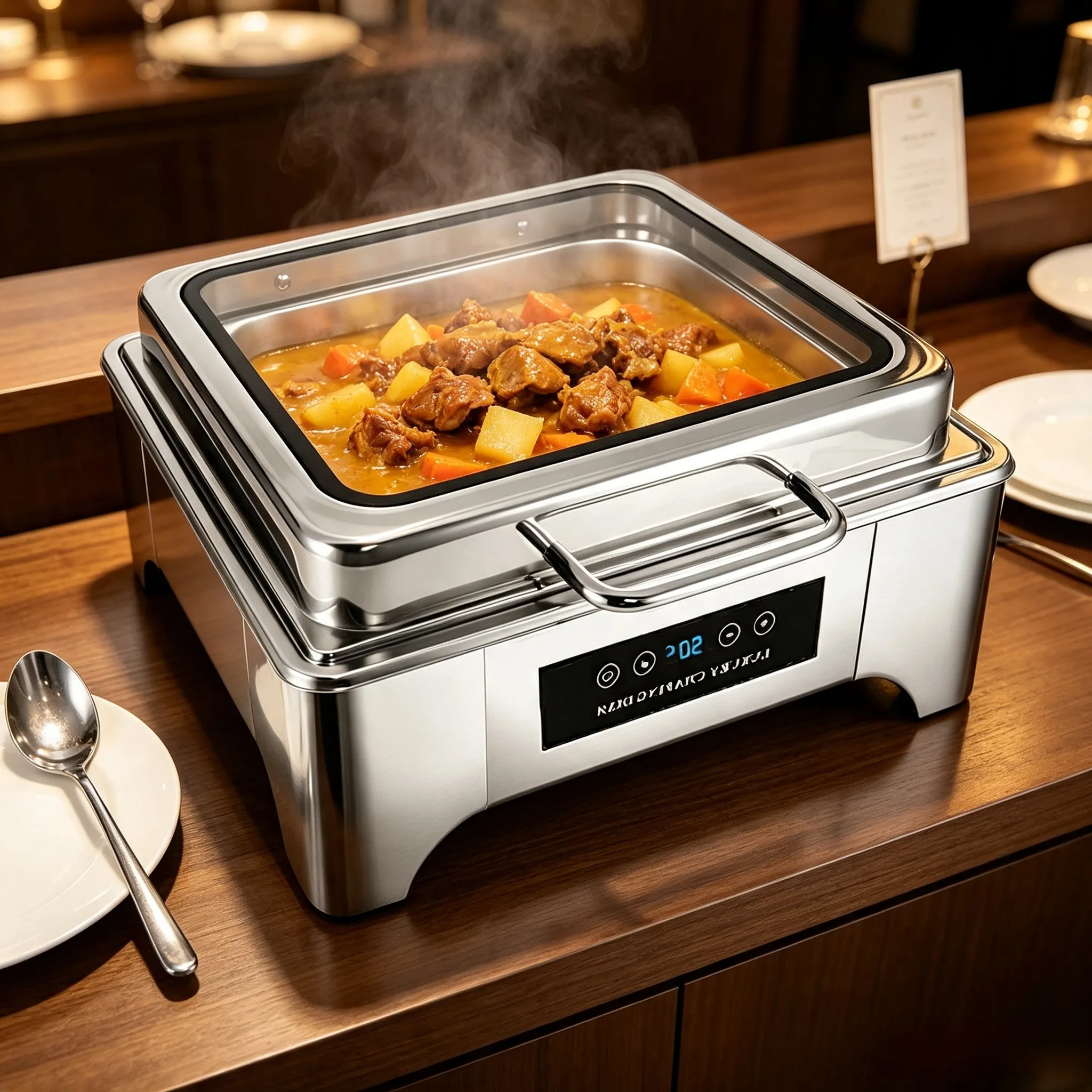
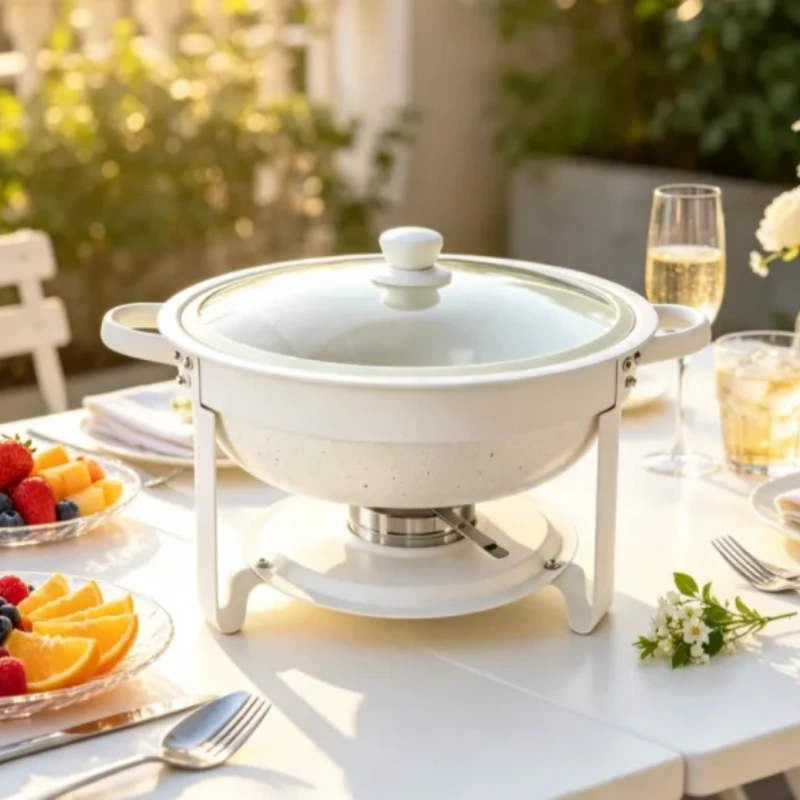
The ideal size can vary significantly according to the type of foodservice operation. A hotel buffet may have very different requirements from a mobile catering company or banquet venue.
Hotels
Hotels often operate breakfast, lunch, and dinner buffets for extended service periods.
Buffet capacity, continuous service, and presentation are key considerations. Larger units can be useful for popular main dishes, while smaller configurations can support side dishes and specialty items.
Restaurants
Restaurants may prioritize menu flexibility and efficient use of table space.
Smaller configurations can help operators present multiple dishes without overcrowding the serving area. Portion control and easy access should also be considered when planning the buffet layout.
Catering Companies
Catering companies work across different venues and event sizes, making setup flexibility particularly important.
Catering chafing dishes should fit the menu, guest volume, transportation requirements, and available serving area. Using multiple sizes can allow catering teams to adapt their setup to different event conditions.
Banquet and Event Venues
Banquet venues may need to serve large numbers of guests through several food stations.
In these environments, capacity, consistent presentation, and efficient replenishment can have a direct impact on service performance. Larger units can support high-volume dishes, while smaller configurations can add variety to individual buffet stations.
What Other Features Should Buyers Consider?
Size should be the starting point, but other product features also affect long-term performance.
When evaluating a commercial chafing dish, purchasing teams should consider:
- Stainless steel construction
- Lid design
- Fuel compatibility
- Food pan configuration
- Water pan design
- Stackability
- Ease of cleaning
These features should support the intended application without distracting from the basic question of whether the size and capacity are suitable for the menu and service format.
For commercial foodservice operations, durability and ease of handling can be particularly important because the equipment may be used frequently, transported between venues, or cleaned repeatedly.
In other words:
Size first, then supporting features.
Selecting the correct size should establish the foundation of the purchasing decision, while other product characteristics help determine whether the equipment is practical for long-term use.
FAQ
Q1:What Is the Most Common Commercial Chafing Dish Size?
Full-size configurations are widely used for main dishes and high-volume buffet service, while half-size configurations are useful for side dishes and smaller portions. There is no single size that works for every foodservice business. The most suitable option depends on menu volume, available space, guest numbers, and service format.
Q2:Is a Full-Size Chafing Dish Better for Large Catering Events?
A full-size unit can be a practical choice for large events because its greater capacity may reduce refill frequency. However, using only full-size units is not always the most efficient solution. Combining full-size and half-size options can provide better menu flexibility and make more efficient use of buffet space.
Q3:Are Half-Size Chafing Dishes Suitable for Buffet Service?
Yes. Half-size units can be useful for side dishes, smaller portions, and buffet layouts where table space is limited. They can also make it easier to display a wider variety of food within the same serving area.
Q4:How Does Chafing Dish Size Affect Buffet Space?
Larger units generally require more table space, while smaller units allow more dishes to fit within the same serving area. When planning a buffet, buyers should consider the number of dishes, serving line layout, lid clearance, and guest movement rather than looking at equipment dimensions alone.
Q5:How Many Chafing Dishes Do I Need for a Catering Event?
The required quantity depends on guest numbers, menu variety, serving volume, buffet stations, and refill frequency. Instead of using a fixed formula, catering teams should plan equipment around the actual service workflow and consider which dishes require higher capacity.
Conclusion
Choosing the right chafing dish size is not simply about selecting the largest capacity. Catering businesses should consider guest numbers, food types, buffet space, refill frequency, and service format before making a purchasing decision.
Full-size units can support high-volume main dishes, while half-size and smaller configurations can improve flexibility and menu variety. By matching equipment size to the actual foodservice workflow, hotels, restaurants, catering companies, and event venues can create a more efficient and organized buffet setup.
Why Choose Lianmei for Commercial Chafing Dishes?
Lianmei focuses on stainless steel foodservice and buffet equipment for commercial applications. Its chafing dish range is designed for environments such as hotels, restaurants, catering operations, and banquet service.
We support wholesale supply for businesses looking for practical buffet equipment for different foodservice applications. By considering the intended serving environment, menu requirements, and equipment configuration, buyers can select a more suitable solution for their operation. Contact us for product details and bulk order support.