When choosing insulated food containers, many buyers focus on material, capacity, or appearance. However, one of the most important factors affecting thermal performance is insulation thickness.
For catering companies, hotels, restaurants, milk tea chains, and food delivery businesses, understanding the relationship between insulation thickness and heat retention can help improve food quality, reduce reheating costs, and enhance customer satisfaction.
In this article, we’ll explain how insulation thickness influences temperature retention and what buyers should consider when selecting commercial insulated food containers.
What Is Insulation Thickness?
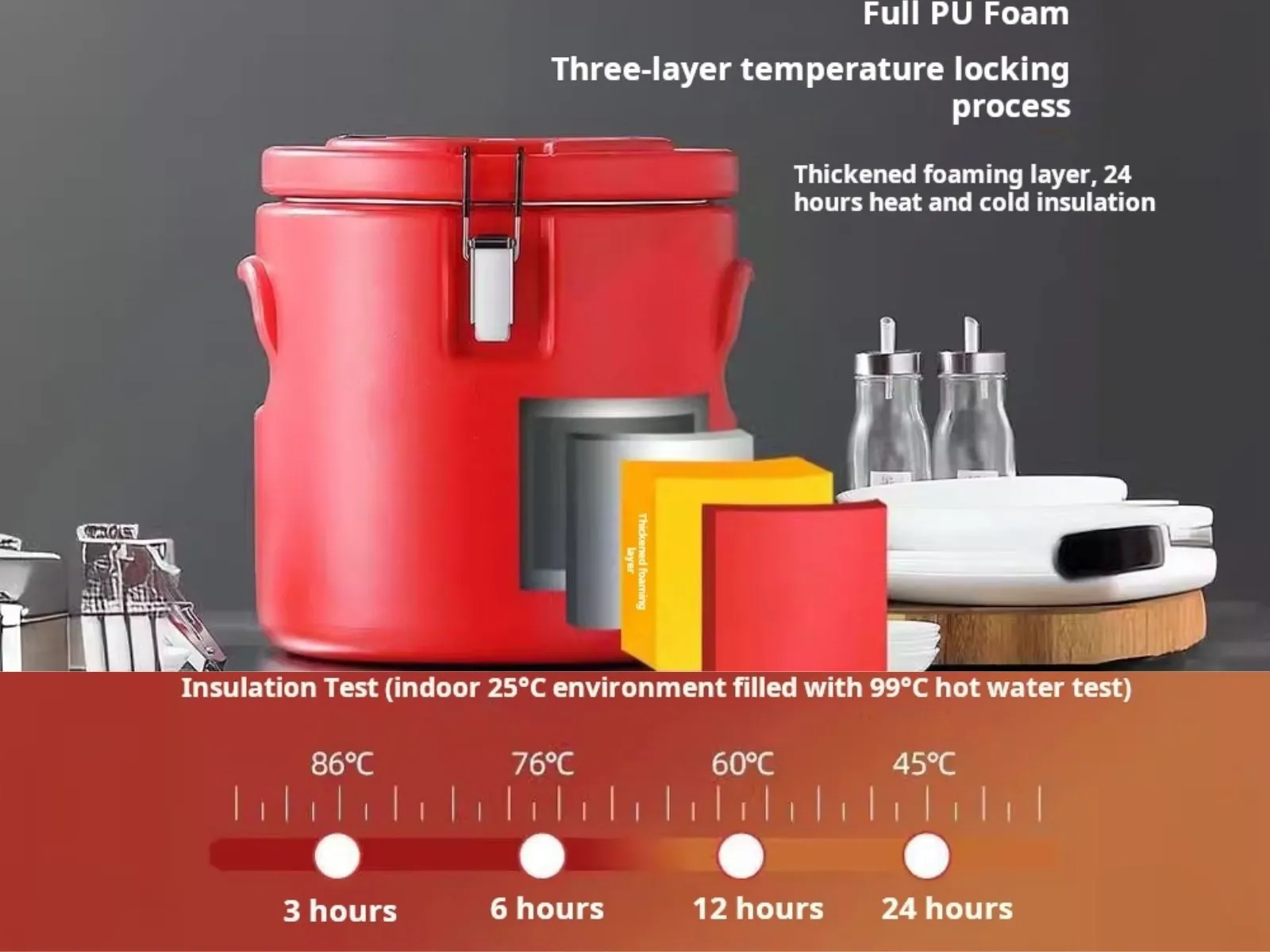
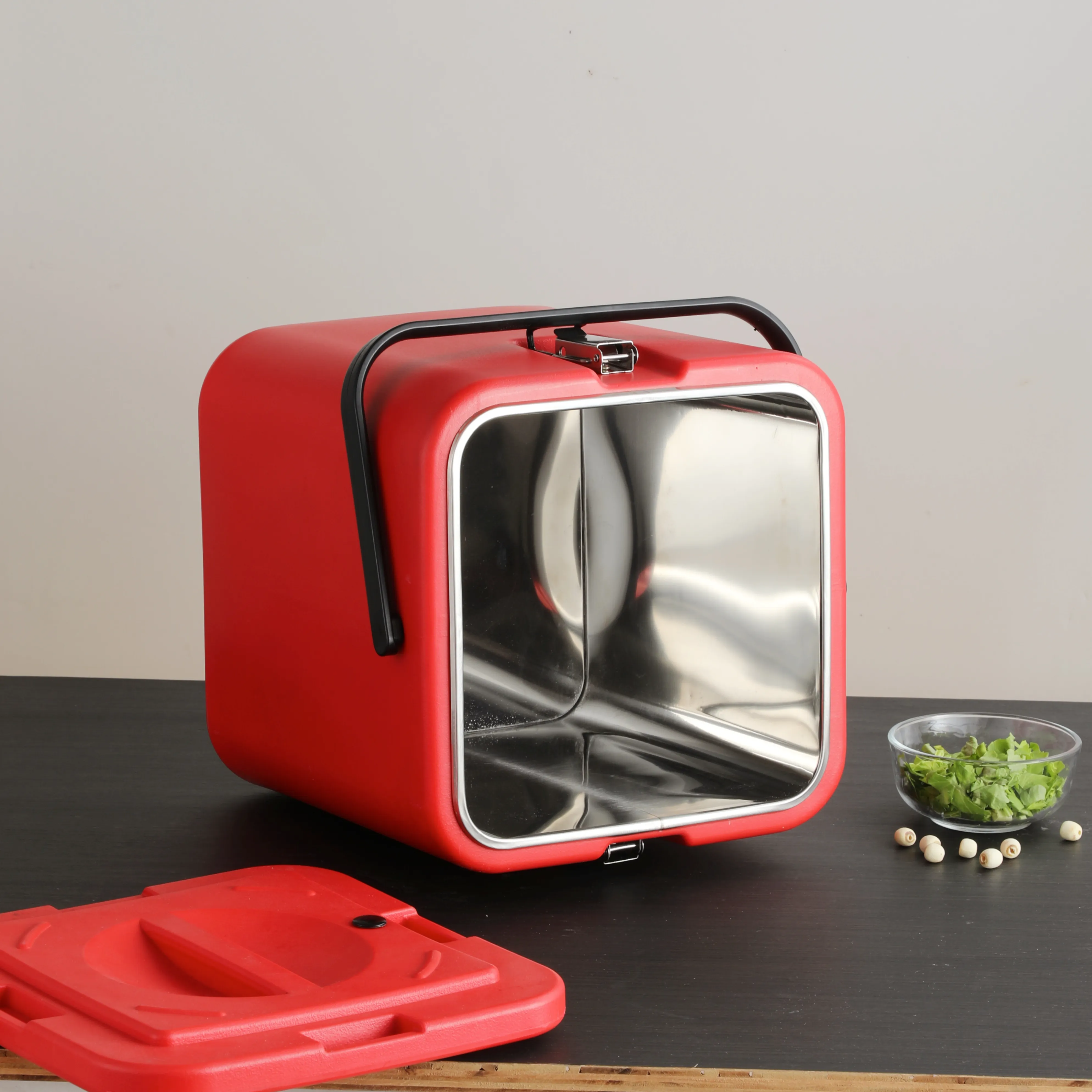
Insulation thickness refers to the distance between the inner stainless steel liner and the outer shell of an insulated container.
This space is typically filled with insulating materials such as polyurethane foam, which slows down heat transfer and helps maintain food temperature for longer periods.
The thicker the insulation layer, the more difficult it becomes for heat to escape from the container.
How Insulation Thickness Affects Heat Retention
Heat naturally moves from a warmer area to a cooler environment. Insulation works by reducing this heat transfer process.
Generally speaking, increasing insulation thickness improves thermal performance because it creates a larger barrier between the hot food and the outside environment.
| Insulation Thickness | Typical Heat Retention Performance |
|---|---|
| 10-15 mm | Suitable for short-term food transport |
| 20-25 mm | Moderate heat retention for daily commercial use |
| 30-35 mm | Excellent thermal performance for catering operations |
| 40 mm+ | Extended heat retention for long-distance transport |
Actual performance may vary depending on food temperature, ambient conditions, and container design.
Why Thicker Is Not Always Better
While thicker insulation can improve heat retention, there is a practical balance to consider.
Excessively thick insulation may result in:
- Increased product weight
- Higher manufacturing costs
- Reduced storage efficiency
- Higher transportation expenses
For most commercial food service applications, the goal is not to maximize insulation thickness but to achieve the best balance between thermal performance and operational convenience.
Other Factors That Influence Temperature Retention
Insulation thickness is important, but it is only one part of the equation.
Insulation Material Quality
High-density polyurethane foam typically provides better insulation performance than lower-grade materials.
Lid Sealing Performance
A well-designed airtight lid can significantly reduce heat loss caused by air circulation.
Container Structure
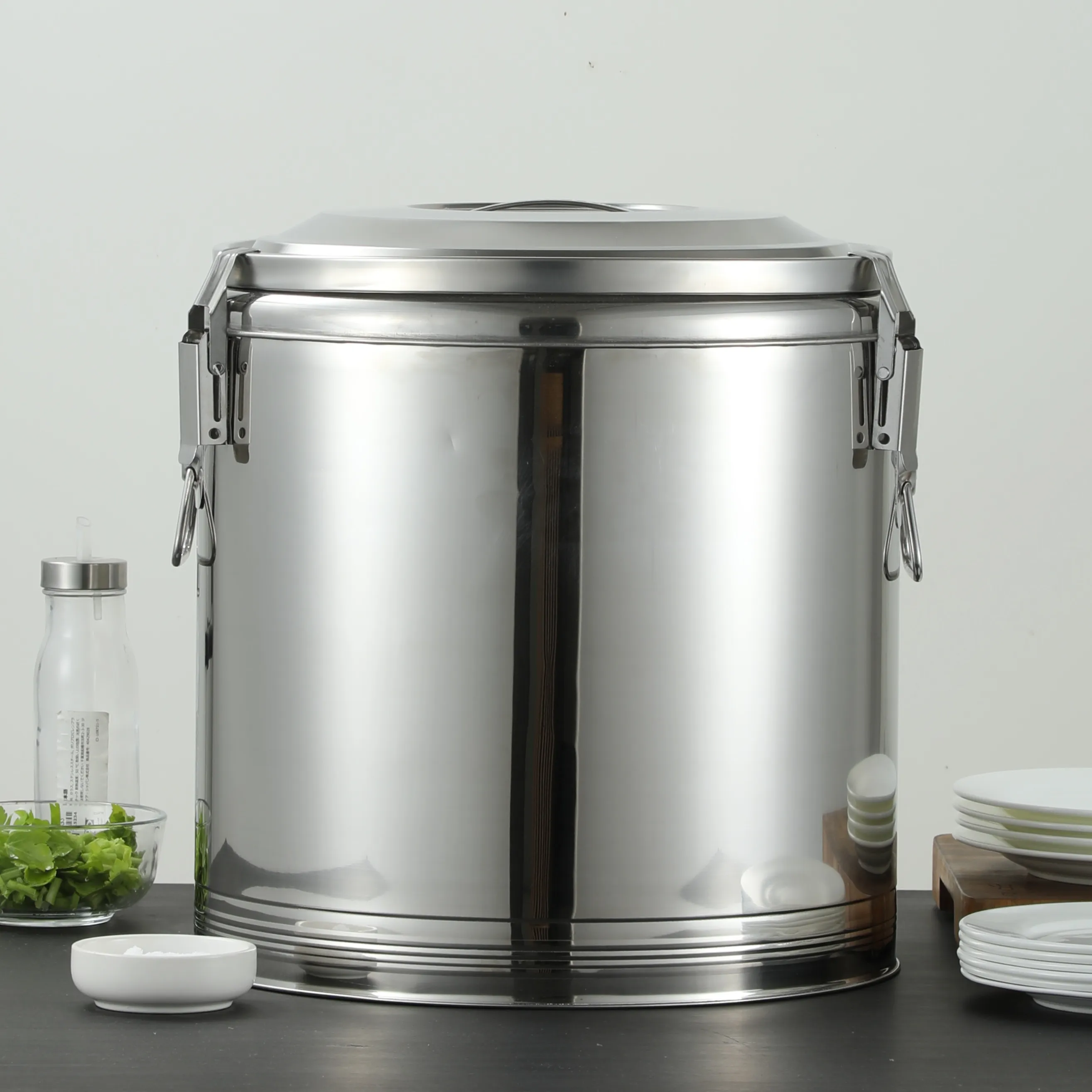
Double-wall stainless steel construction helps improve overall thermal efficiency.
Ambient Temperature
Containers used outdoors or in cold environments generally lose heat faster than those used indoors.
Initial Food Temperature
Food stored at higher temperatures usually remains within the safe serving range for longer periods.
Recommended Thickness for Different Applications
Different industries have different temperature retention requirements.
| Application | Recommended Thickness |
|---|---|
| Restaurant Food Service | 20-30 mm |
| Hotel Buffet Operations | 20-30 mm |
| Milk Tea & Beverage Service | 20-30 mm |
| Catering Delivery | 30-40 mm |
| Outdoor Events | 30-40 mm |
| Long-Distance Food Transport | 40 mm+ |
Selecting the appropriate insulation thickness helps avoid unnecessary costs while ensuring reliable performance.
Buyer Checklist
Before purchasing insulated food containers, consider the following:
✓ 304 food-grade stainless steel construction
✓ High-density insulation material
✓ Appropriate insulation thickness for the application
✓ Airtight lid design
✓ Durable commercial-grade structure
✓ OEM/ODM customization capability
✓ Reliable manufacturing experience
These factors are often more important than price alone when evaluating suppliers.
Conclusion
Insulation thickness plays a significant role in determining how long food stays hot during storage and transportation. However, buyers should evaluate insulation thickness together with insulation material quality, lid design, and overall product construction.
Choosing the right insulated container can improve food safety, maintain serving quality, and enhance operational efficiency across catering, hospitality, and food service industries.
About Lianmei
Lianmei Industrial Co., Ltd. is a professional stainless steel insulated container manufacturer established in 1996 in China. We specialize in producing 304 food-grade insulated buckets, commercial food warmer buckets, milk tea containers, soup buckets, and thermal equipment for global catering and food service industries.
With a factory area of over 50 acres, 38,000㎡ workshops, 33,000㎡ warehouses, 20 production lines, and an annual production capacity of 9.9 million units, we provide reliable OEM and ODM manufacturing solutions for distributors, wholesalers, and international brands worldwide.